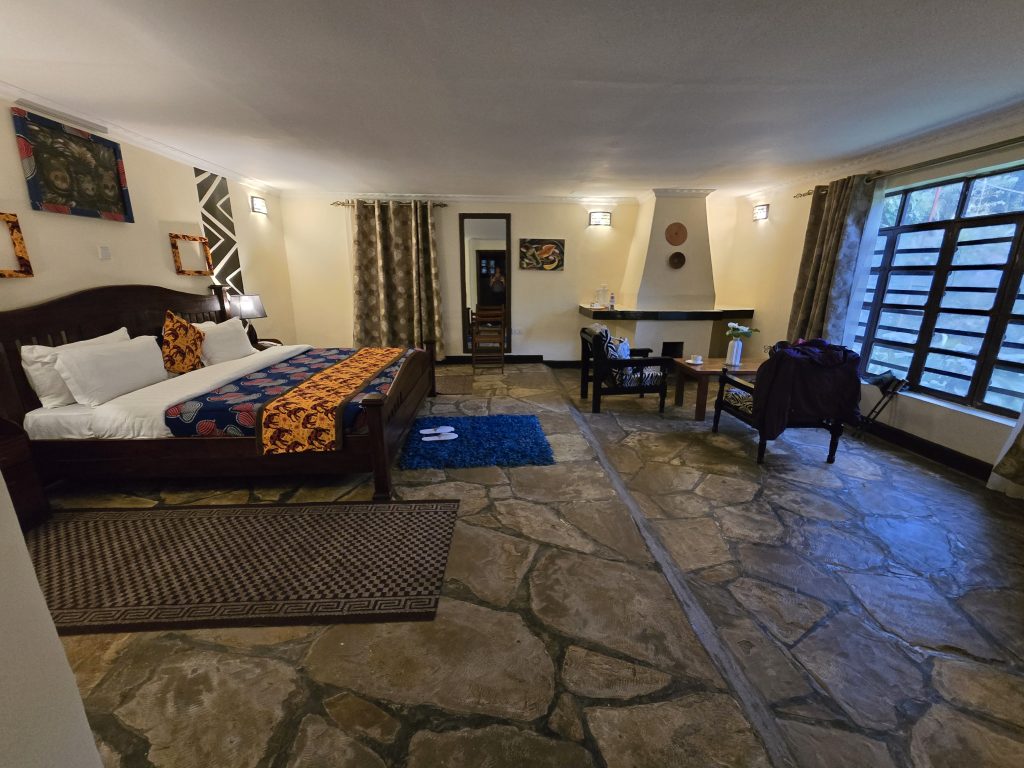
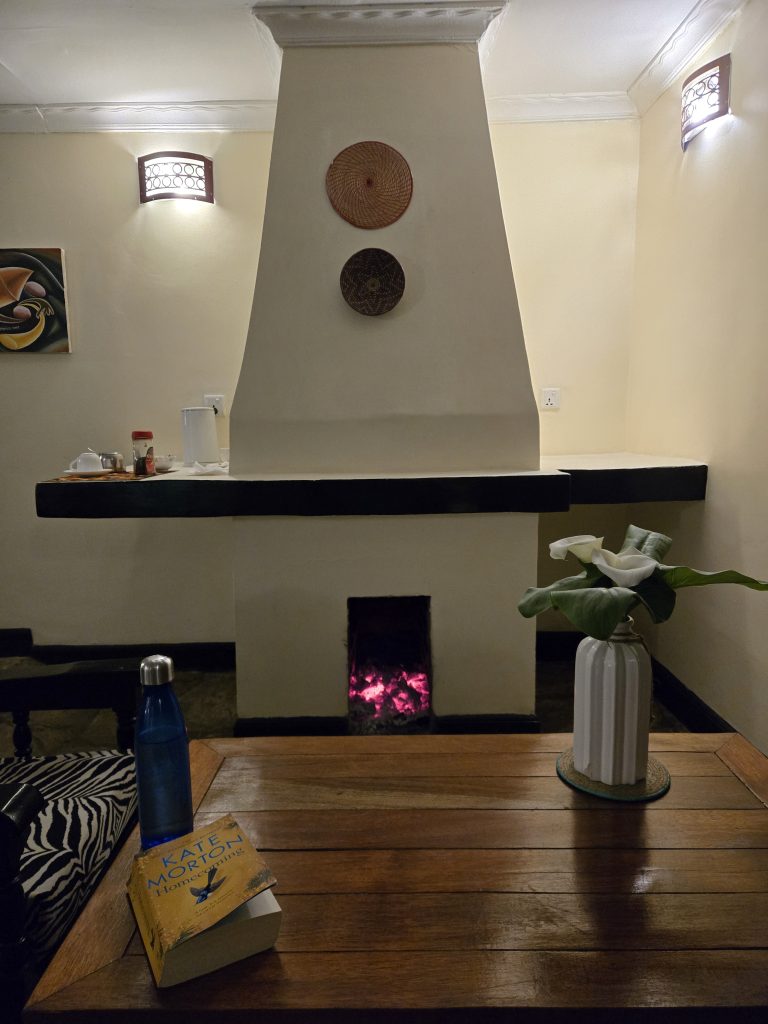
My alarm went off at 5:30 am, much earlier than I usually wake up, but I only snoozed once. It was gorilla day! I was waking up in a king bed all by myself in a private cottage with a fireplace and sitting area in the Da Vinci Gorilla Lodge, Northern Province, Rwanda. I had breakfast in the lodge at 6; met my driver, Abou, outside at 6:45; and was at the Volcanoes National Park at 7 am to find out more about my adventure for the day. Gorilla trekking is the most expensive travel experience I’ve had, but the beauty of connecting with one of human’s closest relatives was peerless.
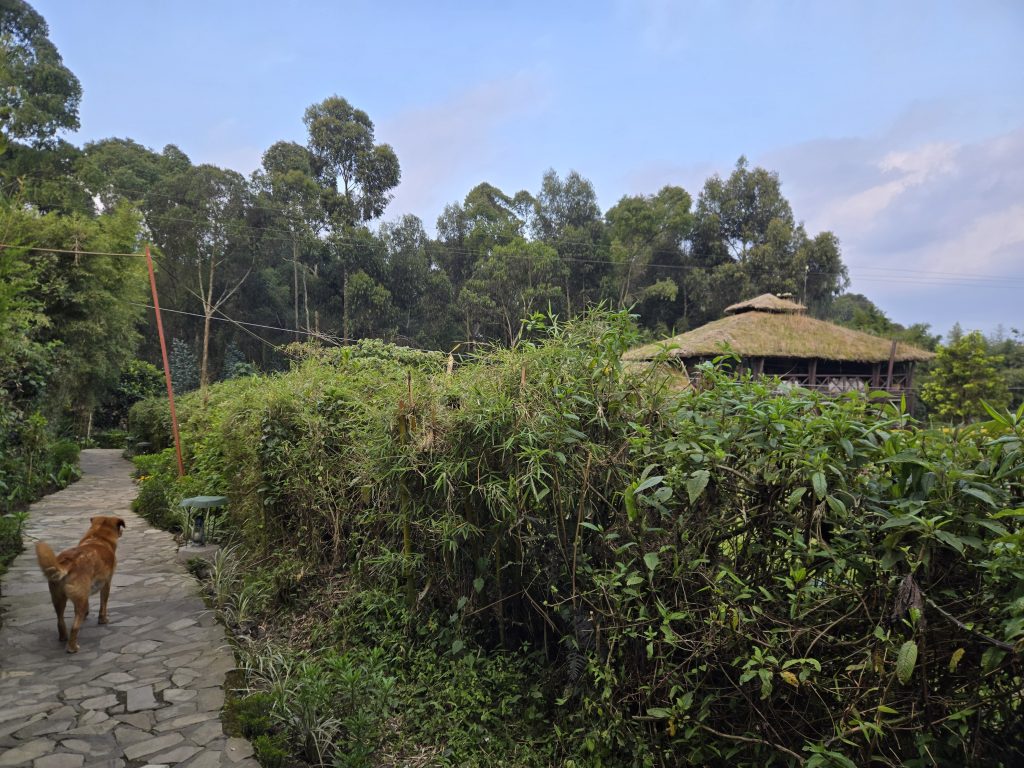
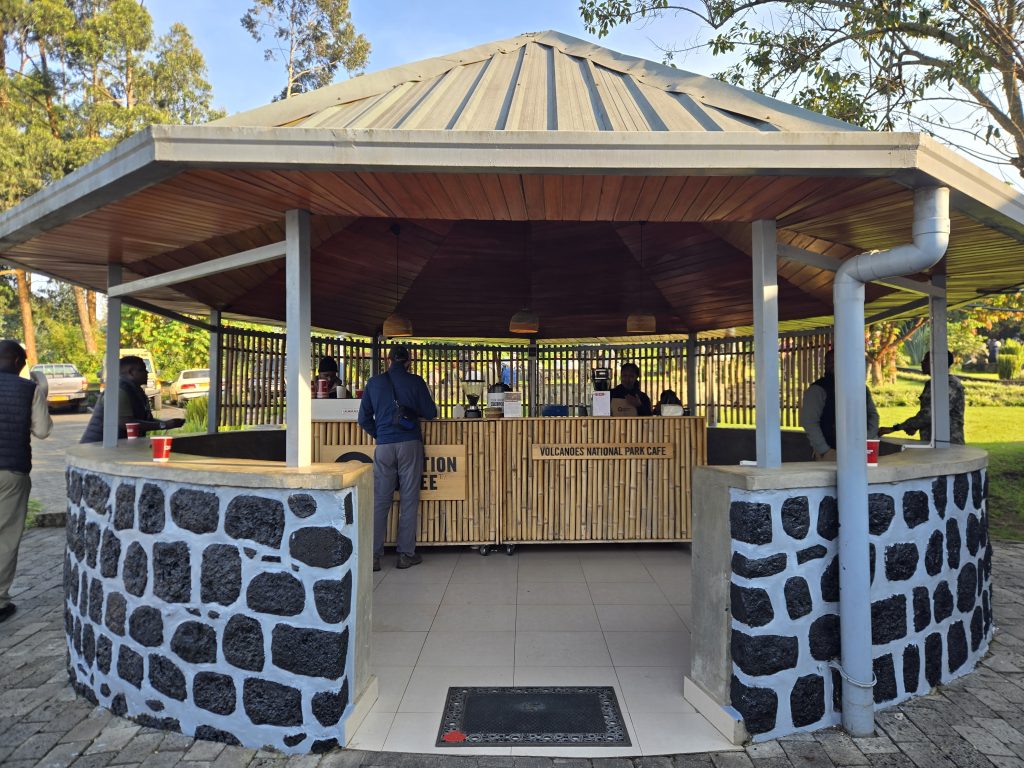
Rwanda is one of only three countries in the world where you can see these critically endangered mountain gorillas. Neighboring Uganda and the Democratic Republic of Congo are also home to wild mountain gorillas. The Rwandan treks take place in Volcanoes National Park, a vibrant landscape with the lush, green Virunga mountains covered in bamboo, thistle, stinging nettles, and a groundcover that smells like mint. But before you start climbing the mountains in search of a gorilla family, everyone meets at the park entrance to be sorted into groups based loosely on hiking ability and assigned a gorilla guide.
Gorilla Logistics
To protect the endangered gorillas, only 96 people are allowed to complete a gorilla trek each day, and they have to purchase a permit in advance to secure their spot. You can buy a permit directly through the government, but I used a tour company to make all of my trip arrangements except my flights. (More details on costs are in my other Rwanda blog post.) When I arrived at the park that morning, I met my guide Christophe and the other 7 people in my trekking group. Each group is limited to 8 people and is assigned to 1 of the 12 gorilla families that trackers keep tabs on. There are other families in the area, but some are reserved for scientific study.
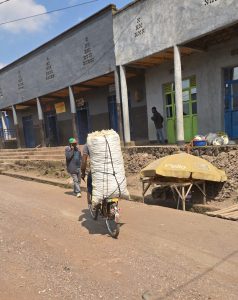
I thought we would be starting the trek in that area, but Abou said we had to drive to the other side of the mountain, 2 hours away. About half of the drive was on a nice, paved road and the other half was on a bumpy, dirt road through small villages. In these villages, little kids lined the road and shouted “Muzunga!” at the passing SUVs. Christophe (who hitched a ride with me and Abou) explained that it means traveler, and it’s a bit of a game for kids to try to get waves and attention from tourists.
We parked on the outskirts of a village near the border of the national park (and so close to the DRC that my phone pinged to tell me I had coverage in the new country) and met a group of porters waiting to be hired by us. My backpack wasn’t heavy, but hiring a porter is a good way to support the local communities around the park, so I brought $20 for this purpose. (US currency is widely accepted for tips and payments like this in Rwanda.) Fidel was the strong, silent type and angled my pack toward me whenever we stopped for a water break so I could easily pull my bottle out of the sleeve. 5 stars.
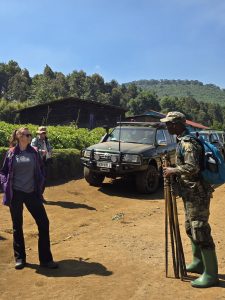
We also met 1 of the 4 trackers who had been following our gorilla family. He carried a rifle and would be walking with us the whole way in case we encountered aggressive animals such as buffalo or elephants. He would shoot to scare, not kill. The other 3 trackers were still somewhere on the mountain, following our family and relaying their position to us via walkie-talkies. These trackers would also stay with the family all day, make note of their chosen bedtime spot, and start tracking them from that known location again the next morning.
Gorilla Communications
Christophe gathered our group together at the trailhead and explained basic gorilla communication to us. He demonstrated 3 distinct sounds that mean, “I want to be your friend,” “I respect you and your dominance,” and “You need to back off.” He had us practice the first 2, to much group giggling, and told us to recognize the third but never do it. He and the trackers might use the third if babies got too close to people, and he wanted us to recognize it in case any of the gorillas made it at us. Obviously, it’s not a sound any of us wanted to hear from a gorilla. Christophe also told us we could make and hold eye contact with any of the gorillas in the family. Our silverback was known as a playful and relaxed leader, so he didn’t mind human eye contact, but most silverbacks don’t abide it. Then Christophe said we’d be hiking for about 1.5 hours but taking plenty of breaks for water. And we were off!
Hiking
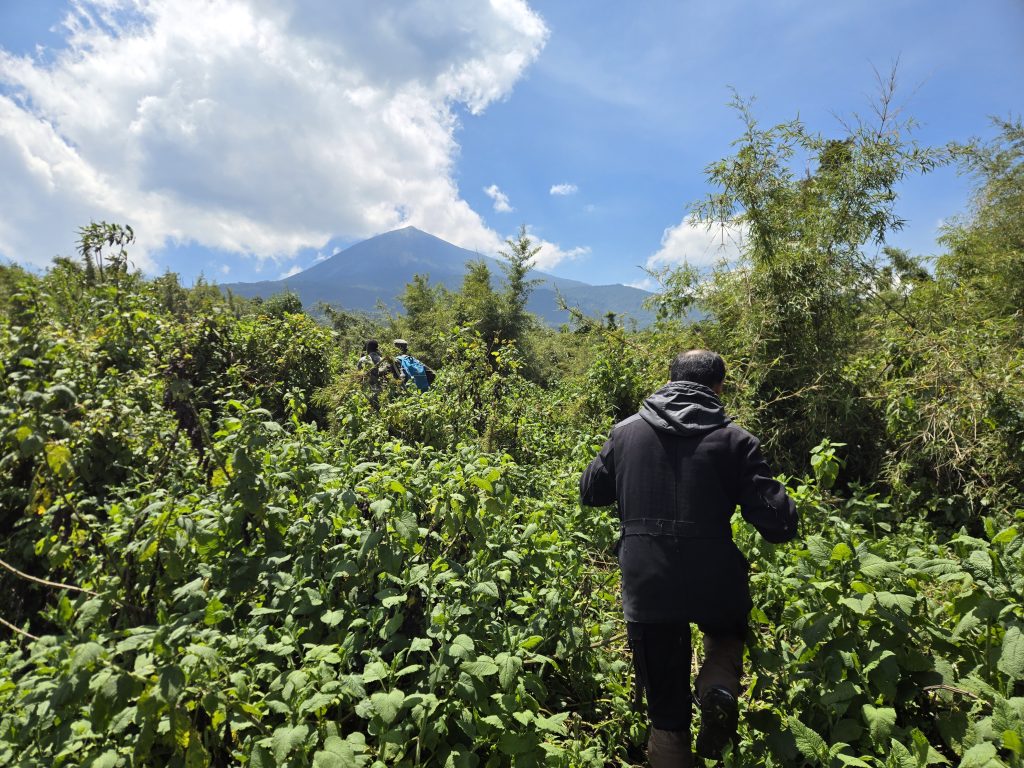
The terrain was thick with mud in areas but also covered in twisted vines, fragrant green groundcover, and scattered piles of buffalo dung. Parts of the trek were steep but as Christophe promised, we stopped after about 10-15 minutes for a water break and an update that the family was moving down the mountain toward us, so the hike might be shorter than we planned. At our second water break, Christophe said the gorillas were still heading in our direction and we might encounter them in the next 15-20 minutes!
Gorilla Hour
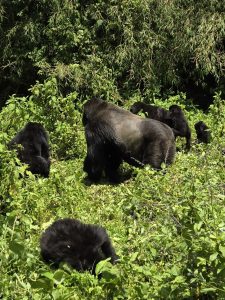
He was right; after about 45 minutes of hiking, we met up with the other trackers, left our bags and hiking poles with the porters, put on face masks to protect the gorillas from diseases (a post-Covid practice), and started half crawling, half walking through the bush until we came out on a clearing. At first glance, I just saw black mounds in the green landscape, and then my brain focused them into individual animals—huge animals that I never thought I’d see up close in the wild.
There were about 12 gorillas total in the family, including 1 silverback, a few juveniles, 2 babies, and nursing mothers, all scattered around the clearing. The rule is, as soon as you see the gorilla family, the 1-hour timer starts. We spent the next hour following the family as they moved down the hill a bit more and settled into a second clearing. They played, ate, groomed each other, and moved around each other and the people completely unbothered.
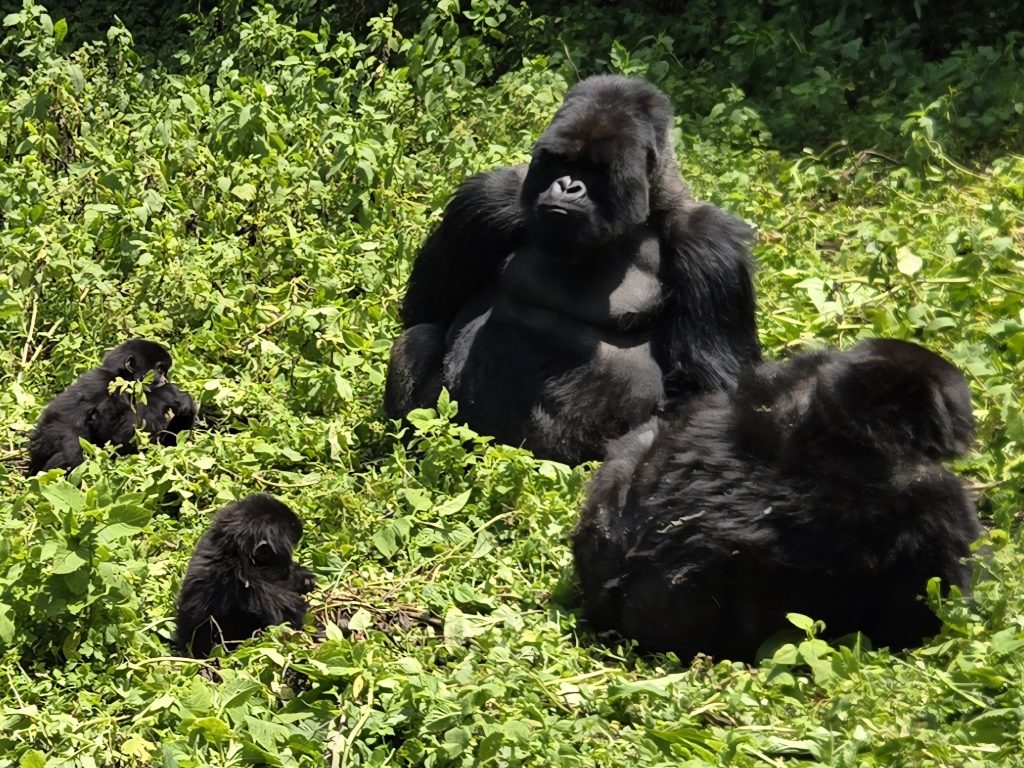
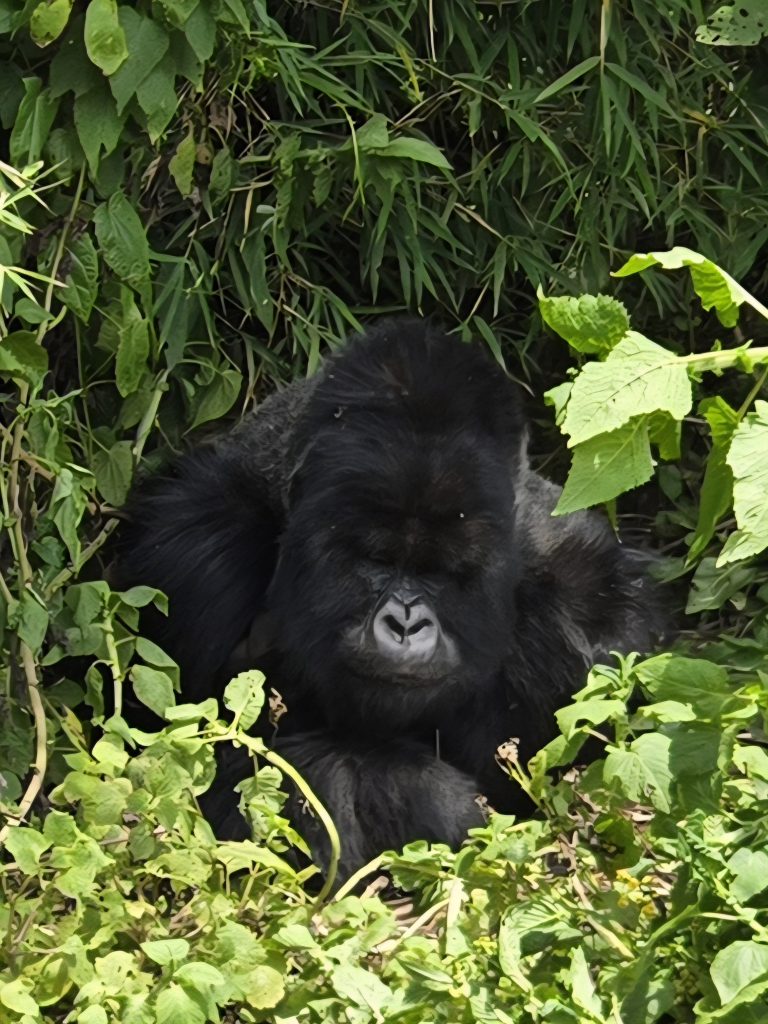
We watched the silverback roll down the hill with one of his babies and then sit 10-15 feet away from us. He stared at our group and picked his nose for at least 2 minutes while we all watched. (Unfortunately, I confused my camera buttons at this point and didn’t film any of the nose picking, which I will regret for the rest of my life.) The experience was absolutely wild. He was making eye contact with us all, not concerned but mildly curious, and snacking on his boogers. Then he rolled over and took a nap, staying tucked under a bush for the rest of the hour.
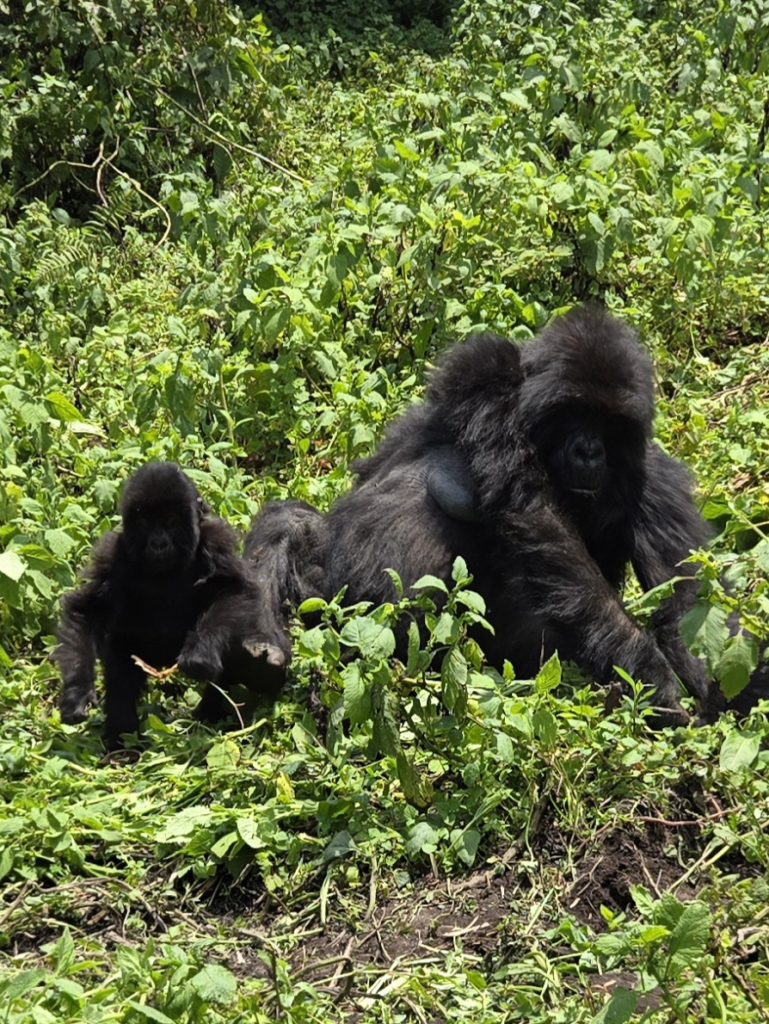
I watched a mom breastfeed her baby, and she held my gaze for minutes. She seemed calm and welcoming. At one point, she reached over and held the hand of another gorilla laying nearby. Then she shifted her baby and flopped down on the ground for a little nap as well.
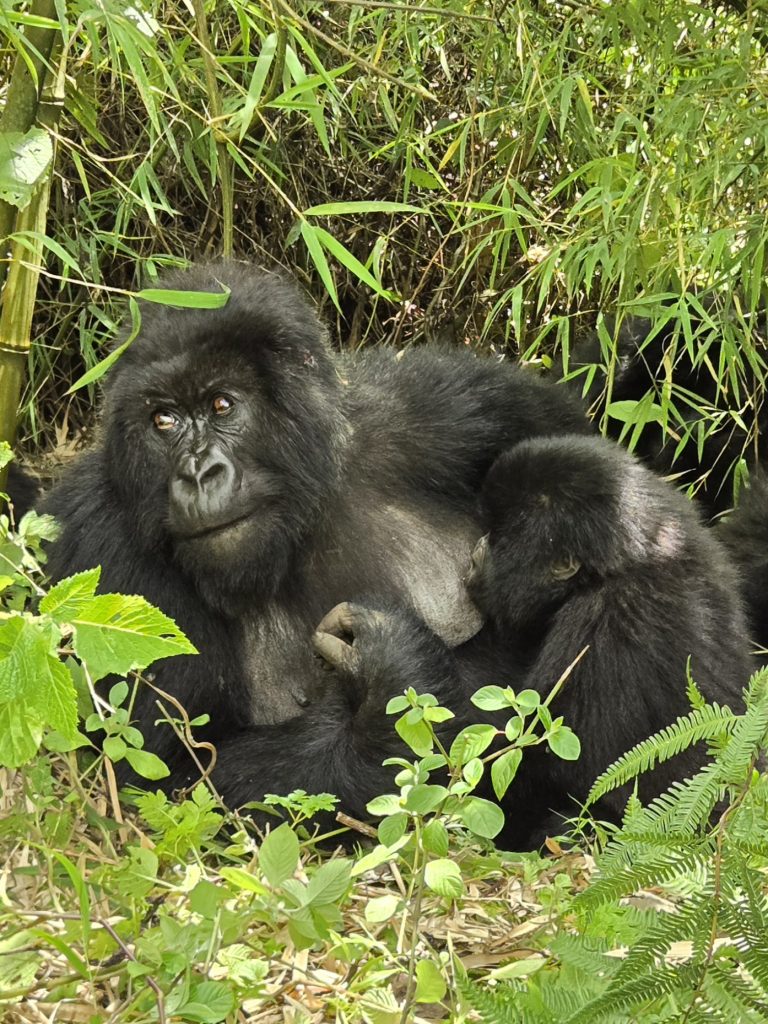
There was a juvenile in the group who hung back while we followed his family to another clearing, waited until we all had our backs to him, and then ran up behind the last man in our group and swatted at his back. Christophe assured him that it wasn’t aggressive behavior but the gorilla was testing boundaries or playing. The same gorilla did it to the same man about 20 minutes later, probably because he got such a fun reaction the first time.
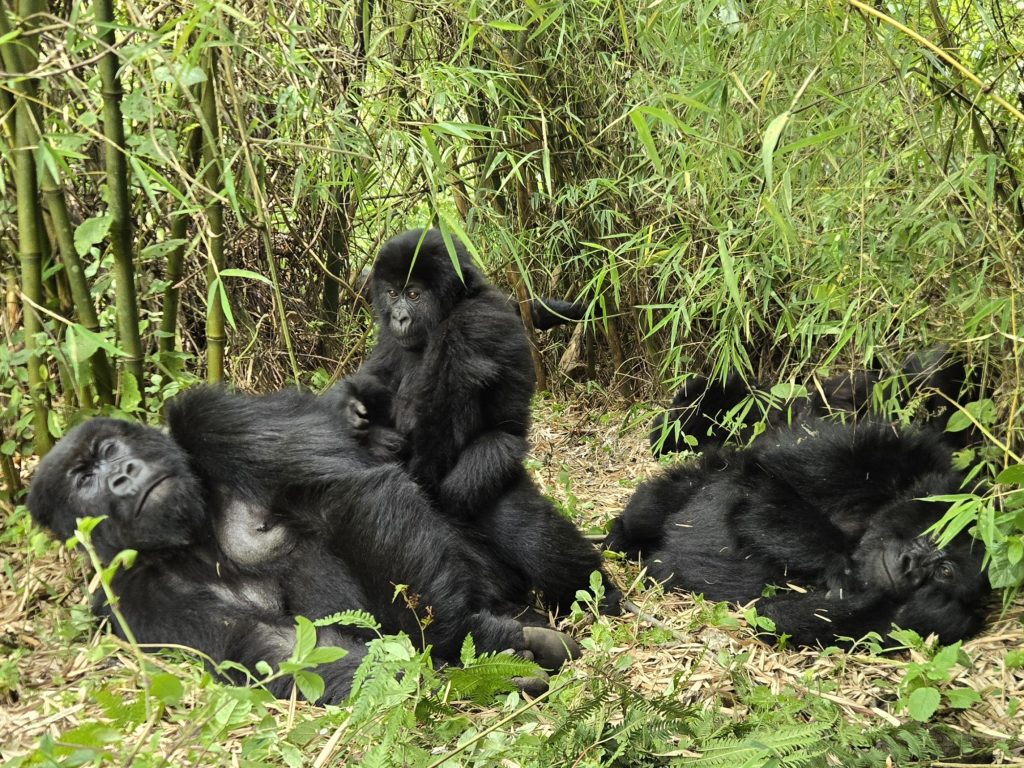
I watched babies swinging from vines and crawling on top of the silverback. I watched a baby practice beating his chest, a “silverback in training,” Christophe said. While watching this, another gorilla walked very, very close to me and sat down, checking out the baby and me. Christophe had warned us that if babies get to close to people, the other gorillas will all come to protect the baby. When the baby kept moving closer, Christophe told me and the woman next to me to get up slowly and move back.
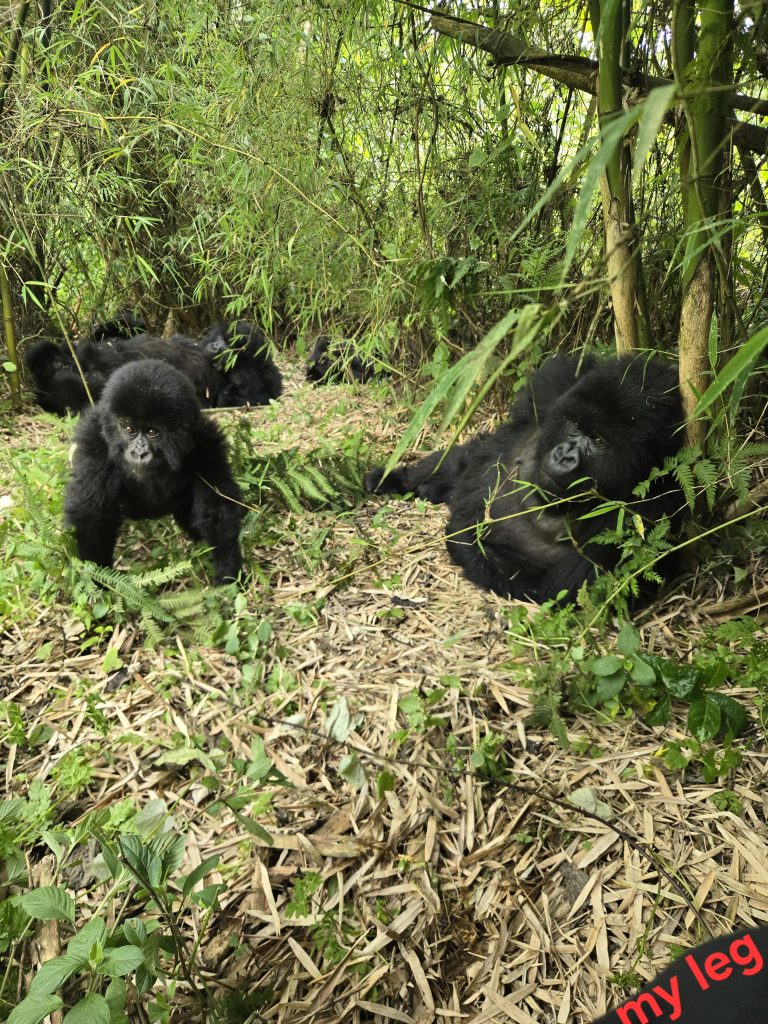
I made the “I want to be friends” noise over and over during that hour. I felt excited but not afraid as the gorillas moved around me, relaxed and intrigued when they sat and stared at me like I was just another animal in the forest (which is exactly what I was). The hour flew by and I was sad when it was time to head down the mountain. We said goodbye, stood up slowly, and walked out of the clearing. When we reconnected with our porters a few hundred yards away, you wouldn’t even know there were a dozen endangered mountain gorillas so close.
Practicalities
Timing
Rwanda has two dry seasons—June to September and December to February—and they are the best times to plan a gorilla trek. Hiking conditions are more favorable, with less mud and rain. Whenever you decide to go, plan in advance. I bought my gorilla trekking permit less than 2 months before my trip, and that was cutting it closer than I’d recommend.
Fitness Level
Gorilla treks can last anywhere from 30 minutes to 4 hours. My tour company asked about my general fitness level and if I thought I could hike all day if necessary. I said I had an average fitness level and could hike all day as long as I had plenty of water and snack breaks. I was sorted into the mid-range group and had a very enjoyable, light hike, but I was mentally prepared to be on the mountain all day. If you’re worried about the physical aspects, tell your booking company that you need to be with the easiest group possible, and they will accommodate you as best they can. I also read that people with mobility issues can hire “human helicopters.” You can pay a team of porters (15–20 men, depending on your size) to carry you on a platform through the hike. I didn’t see anyone using this option, but it’s there.
Tipping
Plan to tip your gorilla guide, porter, and trackers. I also tipped my driver/general guide Abou each day. You can tip in Rwandan francs or US dollars. Standard tip ranges are:
- Gorilla guide/park ranger: USD 5–10
- Porter: Some porters charge a set rate and others work for tips. USD 5–10 total payment is standard.
- Trackers: USD 5 for the group of trackers (not individually)
- Driver/general guide: USD 10/day
Gear
I brought my own hiking poles with me because I read somewhere you can’t get gear onsite. That was incorrect. Christophe handed out hiking poles, free of charge, to everyone at the start of the trek. Some things you should bring are:
- Broken-in, waterproof hiking boots
- Long-sleeved shirt and comfortable pants: To protect your skin from stinging nettles, thorns, and insects. I got sweaty, but I was happy to have a long-sleeved shirt.
- Tall socks/gaiters: To avoid having to rent gaiters at the park, I tucked my pants into my socks and was perfectly fine. If you have gaiters and enjoy them, bring them.
- Rain jacket: I didn’t need to use it, but it was reassuring to have it.
- Gloves
- Water and snacks
- Camera of your choice: I only brought my cell phone. About half of my group used their phones and the other half had nice cameras. Flash photography is not allowed.
- Excitement and patience: It’s a once-in-a-lifetime experience! Soak it all in.